Trade edition
Dental practices
How Orange County practices get found by new patients — on Google, on Maps, and in AI answers. The whole system in order, and you can run all of it yourself.
Read the playbook 12 min read

How Orange County service businesses get found on Google and AI search — without overpaying an agency to do it.
01Are you invisible?
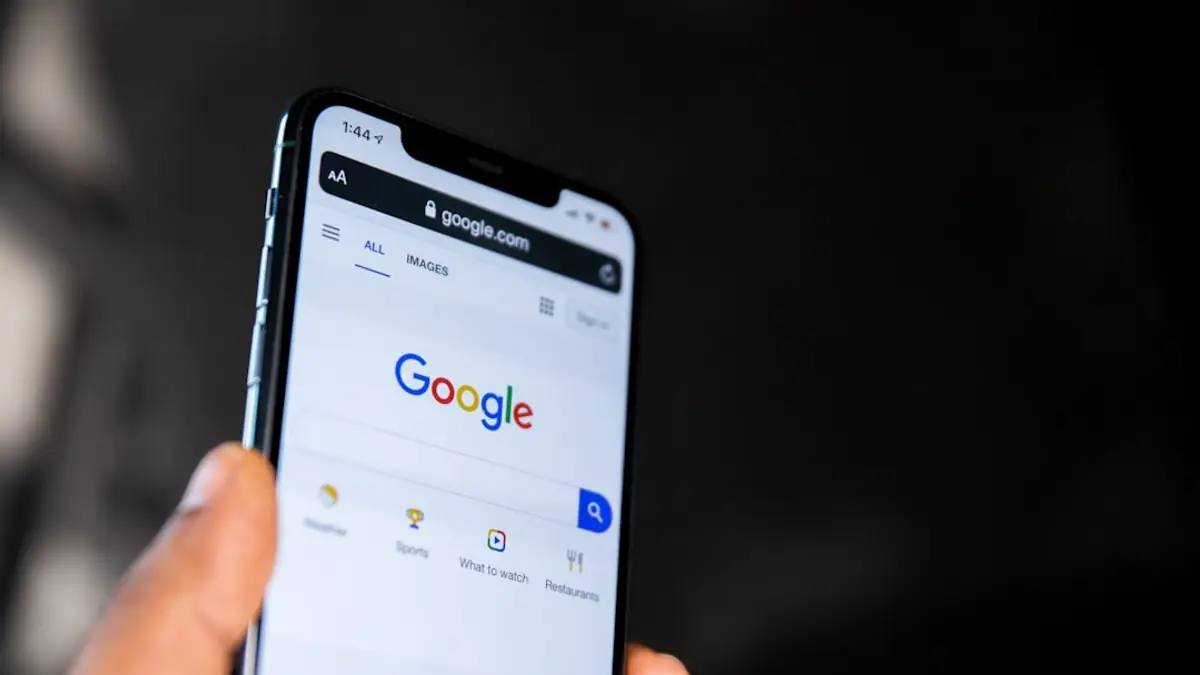
Before you spend a dollar on marketing, find out where you really stand. These five checks need nothing but your phone, and each failure points at the exact chapter that fixes it.
Read chapter 7 min read
02Google Business Profile
It is not your website. It is the free listing that decides whether you show up on Google Maps — and for most local businesses it rings the phone more than the website does.
Read chapter 9 min read

03Reviews
Every review you collect keeps working, and unlike ads they do not stop the month you stop paying. Here is how to build a system that runs without you remembering.
Read chapter 9 min read

04Your website
You still need one, even with a perfect Google profile. The honest reason is ownership — and five things matter far more than the design everybody argues about.
Read chapter 9 min read

05Local SEO
Regular SEO competes on topics. Local SEO competes in a radius. Here is where the ranking weight really sits, and the ten items worth working through in order.
Read chapter 11 min read
06AI search
A growing share of customers ask an assistant before they ever open a search page. This is the chapter no other agency in Orange County is writing, and the odds are still very improvable.
Read chapter 10 min read

07Social media
Most agency content tells you to do more social. This chapter tells you to do less, better — and for some trades, almost none at all.
Read chapter 8 min read

08What it costs
Ask five agencies and you get five wildly different prices. Here is what the market charges, what we charge, and the four questions that tell you whether any quote is honest.
Read chapter 9 min read

09Hiring an agency
This chapter arms you against us too. That is deliberate — the readers who need it most have already been burned once.
Read chapter 9 min read

10Your first 90 days
Everything in this playbook, sequenced. Four phases, because each one makes the next work better — and the first week is free.
Read chapter 8 min read
Same system, written for your business, with the examples and numbers that actually apply to it.
Not listed? The general playbook below covers every local service business, and the industries page has what we do for HVAC companies, restaurants and painters.
Trade edition
How Orange County practices get found by new patients — on Google, on Maps, and in AI answers. The whole system in order, and you can run all of it yourself.
Read the playbook 12 min read
Trade edition
How Orange County contractors get found for the jobs worth having — remodels, additions, real projects. The whole system, and you can run it yourself.
Read the playbook 11 min read
The short version — every chapter, summarised
This playbook is written for people who own a local service business in Orange County — dentists, contractors, HVAC companies, painters, restaurants, salons, flooring installers. If you have ever paid an agency and never quite understood what you got for it, you are the reader we had in mind.
Here is the honest framing. You can do every single thing in this playbook yourself. Some of it is tedious. None of it is secret. The work that moves the needle most for a local business — claiming your Google Business Profile, fixing your details everywhere they appear, asking customers for reviews — costs nothing but attention.
No email required. Nothing is hidden behind a form. There is no chapter eleven that only paying clients see.
Orrku Media is a digital marketing agency in Huntington Beach, CA, and we do this work for local service businesses across Orange County. So yes, we would like to work with you. But if you read this, do it yourself, and never contact us, that is a genuine win for you and we are fine with it. The owners who were never going to hire an agency were never leads anyway.
The playbook is a map, not a manual. Each of the ten chapters explains what a piece of your online presence is, why it matters, and where it sits in the sequence — then points you to a longer article that covers the how in full detail. Read it front to back if you are starting cold. Jump to what you need if you already know where the problem is.
Start with Chapter 1. It is a five-minute self-test that tells you which chapters actually apply to you.
Serving Huntington Beach, Costa Mesa, Newport Beach and surrounding areas.
Before you change anything, find out where you actually stand. These five tests take about five minutes and need nothing but your phone and a browser. Do them in an incognito or private window — otherwise Google shows you results shaped by your own search history, and your business will look like it ranks better than it does.
Open incognito. Search your main service plus your city: "emergency plumber Costa Mesa", "dentist Huntington Beach". Are you on page one? Separately, are you in the map pack — the box of three businesses with the map beside it? Being on page one and being in the map pack are two different wins.
Search your exact business name. A panel should appear on the right with your photos, hours, reviews, and a call button. That is your Google Business Profile. If it is missing, thin, or shows wrong hours, that is the highest-priority problem on this list.
Open ChatGPT or Perplexity and ask it the way a customer would: "Who's a good HVAC company in Fountain Valley?" Does your name come up? Ask twice, phrased differently. Answers vary between runs, so one blank does not mean much, but two blanks tell you something.
Not your desktop. Your phone, on cell data, not office wifi. Count the seconds until you can read the page. Over three and you are losing people. Then try to tap your phone number. If it does not dial, you are losing the easiest lead you will ever get.
Search site:yourwebsite.com — your domain, no spaces after the colon. Google lists every page it has stored. Zero results means Google has not indexed your site at all, and nothing else in this playbook will help until that is fixed.
Count your failures, then go where they point.
Most owners we run these checks for fail three of the five. That is normal, and it is fixable.
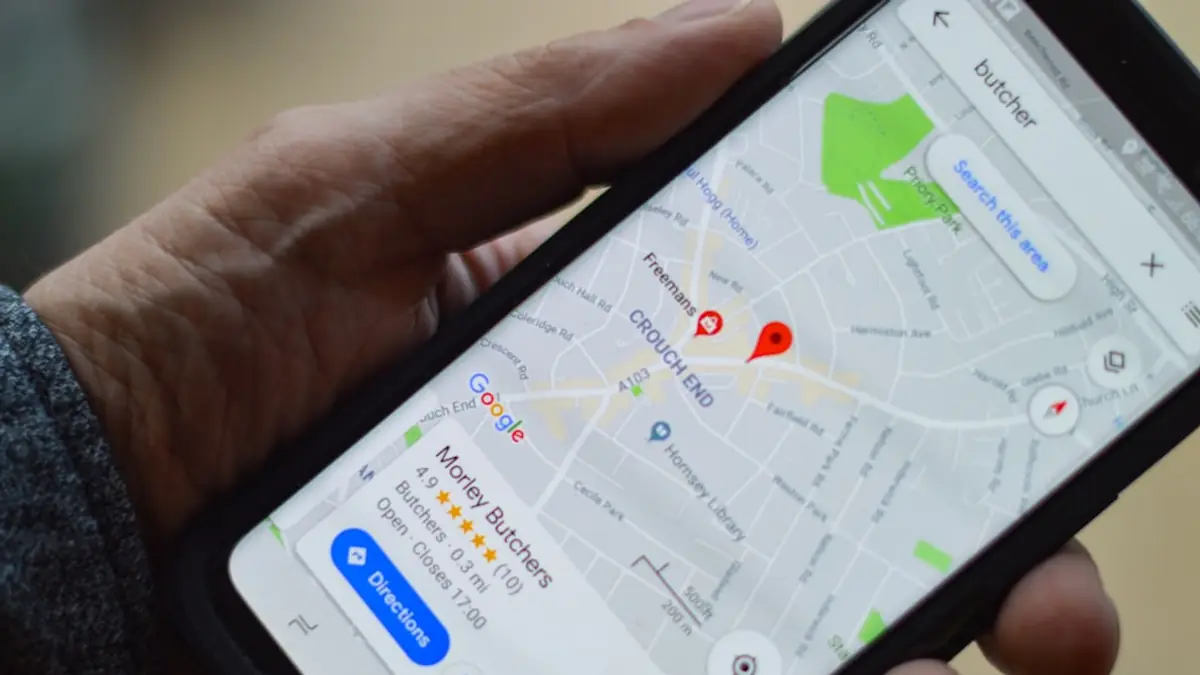
Your Google Business Profile is the free listing that shows your business on Google Maps and in the local results. It is not your website. It is a separate thing you claim and manage, and for most local service businesses it produces more calls than the website does.
Google Business Profile signals account for roughly 32% of local pack ranking weight — the single largest factor group in local search. Around 46% of all Google searches now carry local intent.
The short version of what to do:
Reviews are the asset that compounds. Every one you collect keeps working, and unlike ads they do not stop the month you stop paying.
The numbers worth knowing, as of 2026:
That last number is the one almost nobody is talking about, and it is why reviews now matter for AI search as much as for Google.
The short version:
You still need a website, even with a complete Google Business Profile. The honest reason: the profile is rented land. Google sets the rules, changes the layout, and can suspend you. Your site is the one asset you own. AI assistants also cite websites, and they cannot cite a listing you do not control.
Five things a local service website must do, in priority order:
What matters less than people think: the hero video, the animated slider, the About page nobody reads, and matching whatever your competitor's site looks like.
On platforms, fairly: Wix and Squarespace are genuinely fine for a brochure site. They get limiting once local SEO is the point — page speed, control over structured data, and managing a real set of location pages all get harder. That is a scale problem, not a reason to panic if you are already on one.
Core Web Vitals in plain English — three numbers Google measures about the experience of your page: how fast the main content appears, how quickly the page responds when tapped, and how much the layout jumps around while loading. Slow, unresponsive, or jumpy all cost you rankings and customers.
Local SEO is the work that gets you into the map pack and the local results for searches near you. Regular SEO competes nationally on topics. Local SEO competes in a radius.
Where the weight sits in 2026:
| Signal group | Weight |
|---|---|
| Google Business Profile signals | |
| On-page signals | |
| Review signals | |
| Link signals | |
| Behavioral signals | |
| Citation signals |
Read that table as a spending guide. Two thirds of the outcome sits in your profile, your pages, and your reviews — the three things you can influence directly and cheaply.
The short version:
Orrku Media is a digital marketing agency in Huntington Beach, CA that builds local SEO around Google Business Profile optimization, city-level service pages, and structured data for service businesses across Orange County.
This is the chapter no other agency in Orange County is writing, and it is the one most likely to matter in twelve months.
What changed: AI Overviews now sit above the local map pack on many searches. More importantly, a growing number of people skip search entirely and ask ChatGPT, Perplexity, or Gemini for a recommendation. If the assistant does not know you exist, you were never in that conversation.
Good news first — this is not a separate discipline. Most of the work is the SEO you were already meant to do. But there are specific additions.
What makes a business citable by an AI assistant:
Two practical checks. First, your robots.txt file may be blocking AI crawlers — GPTBot, PerplexityBot, ClaudeBot — sometimes added by a plugin without anyone deciding to. Second, llms.txt: a file that lists your key pages for AI systems. Google ignores it. We ship one anyway, because the cost is minutes and the other systems are still settling.
The honest limit: nobody controls what a model outputs. Anyone guaranteeing you a ChatGPT recommendation is lying. What you can do is improve the odds, and the odds are currently very improvable because almost no local business has done any of this.
Most agency content tells you to do more social. This chapter tells you to do less, better.
The honest answer to "do I need social media" is that it depends on your trade, and the difference is large enough that a blanket yes is bad advice.
| Trade | Does social matter? |
|---|---|
| Restaurant | Yes. Instagram is a menu and a queue. |
| Salon, med spa | Yes. The work is visual and the audience browses. |
| Dental | Some. Faces build trust, but search drives bookings. |
| Contractor, painter, flooring | Some. Before-and-afters do real work. |
| HVAC, plumbing | Mostly no. Customers search in an emergency; they do not browse a feed. |
The one thing that always matters, whatever your trade: posting to your Google Business Profile. It is technically social, it takes five minutes, and unlike an Instagram post it feeds your local ranking directly.
Cadence, realistically: two good posts a month beats fourteen thin ones. An abandoned account with a 2019 last post is worse than no account, because customers read it as a business that might be closed.
What to post when you have nothing to say: a finished job, a before-and-after, the team, or the answer to a question you get asked every week.
Website versus social, directly: you need the website. Social is rented land, same as the profile. Build on what you own.
Here is what the market charges, so you can judge any quote you are handed.
| Service | Typical range |
|---|---|
| SEO retainer, small local business | $500 – $1,500/mo |
| SEO retainer, small-to-mid business | $1,500 – $5,000/mo |
| SEO agency average retainer | about $3,209/mo |
| Small business website, freelancer | $3,000 – $8,000 one-time |
| Small business website, boutique agency | $8,000 – $15,000 one-time |
| Social media management | $300 – $2,000/mo |
And here is ours, plainly:
| Plan | Monthly |
|---|---|
| Starter — Website | $299/mo |
| Essential — Local SEO | $599/mo |
| Growth — Local SEO + AI Search | $999/mo |
| Professional — Local SEO + AI Search | $1,499/mo |
| Elite — plus Map Pack | $1,999/mo |
More useful than either table: how to read a proposal. Ask for these four things before you sign anything.
If a proposal cannot answer those four, the price does not matter.
Start with when you should not hire anybody. If you have under about $500 a month to spend on marketing, do not spend it on an agency. Spend the time instead: complete your Google Business Profile, fix your details everywhere, and ask your last twenty customers for reviews. That is the highest-return work available to a local business and it is free. Come back when there is budget to build on top of it.
When you are ready, ask every agency these five questions:
Red flags, in rough order of severity: guaranteed rankings. A "proprietary algorithm" nobody will describe. No named deliverables. A twelve-month lock-in. Refusing to put account ownership in writing. Reporting that shows impressions climbing while your phone stays quiet.
Good reporting is boring and specific. It says: here is what we did this month, here is what moved, here is how many calls and forms came in, and here is next month's plan. One page. Numbers you can check yourself in Google Business Profile and your call log.
How to leave cleanly: get your account access back first, confirm you can log in to everything, then give notice. In that order, every time. Doing it the other way round is how people lose their domain.
This chapter arms you against us too. That is deliberate. If you can hold Orrku Media to the same five questions, you should.
Everything above, sequenced. Do it in this order, because each phase makes the next one work better.
Why first: this is the 32% of ranking weight plus the start of the 16%, at zero cost. Nothing else you can do this week comes close.
Why second: the profile sends people somewhere. Make sure the somewhere works before you send more.
Why third: this is where you start competing rather than just existing.
What to expect, honestly. Reviews and profile work can move things in weeks — sometimes days for the map pack. On-page and content changes take longer. Meaningful SEO movement is three to six months, and it compounds after that. If you are at day 90 with more reviews, a complete profile, a fast site, and a real service page, you have done the work correctly even if the rankings are still climbing. Rankings lag the work; they do not lead it.
If any of this is more than you want to take on, that is what we do. If it is not, you now have the whole plan.
Most local service businesses in Orange County spend between $500 and $2,000 a month. Below $500, do the free work yourself first — Google Business Profile and reviews return more than a small retainer can. Orrku Media plans run from $299/mo to $1,999/mo, month-to-month.
Expect three to six months for meaningful movement in rankings. Google Business Profile and review work move faster, sometimes within weeks. Content and link building are slower and compound over time. Anyone promising page-one results in 30 days is selling something they cannot deliver.
Yes. Your Google Business Profile is rented land — Google controls the rules and can suspend it. Your website is the asset you own, and AI assistants cite websites when recommending businesses. The profile generates calls; the website is what makes the profile credible.
There is no fixed threshold, but businesses with 50 or more reviews get roughly 4.4 times more clicks than those under five. The largest gain comes from moving past 50. Around 150 reviews per location is where AI assistants begin naming businesses in recommendations.
Google Business Profile signals, at roughly 32% of local pack ranking weight in 2026. On-page signals follow at 19%, then reviews at 16% and links at 15%. Completing and maintaining your profile is the highest-return local SEO work available to any business.
Yes, and the highest-value parts are free. Claiming and completing your Google Business Profile, fixing your business details across the web, and collecting reviews need no agency and no budget. Technical work — schema markup, site speed, indexing problems — is where most owners want help.
Make yourself easy to identify and safe to cite: consistent business details everywhere, direct answers to real questions on your own pages, schema markup, and enough reviews and mentions to corroborate you. Nobody controls model output, so treat any guarantee of an AI recommendation as a warning sign.
Named month-one deliverables, written account ownership of your domain, site and profile, a contract you can leave, reporting that counts calls and forms rather than impressions, and a clear answer about who does the work. Guaranteed rankings are the clearest red flag.
The usual causes are an unclaimed or unverified Google Business Profile, a wrong primary category, inconsistent name, address and phone details across the web, or too few reviews to compete locally. Search your business name in an incognito window to see which applies.
It depends on the trade. Restaurants and salons genuinely need Instagram. HVAC and plumbing companies mostly do not — those customers search in an emergency rather than browse. Posting to your Google Business Profile matters for every trade, because it feeds local rankings directly.
Nothing was held back and nothing is behind a form. If you work through it yourself and never contact us, that is a genuine win for you.
5.0 rating · Orrku Media, Huntington Beach, CA
Your whole digital presence — website, Google, reviews, social & AI search — plated by one team. One price. No à-la-carte surprise invoices.
A real strategist reviews your site — then emails what's costing you rankings, and what to fix first.
Your request is recorded. We'll email the prioritized findings within1 business day. A walkthrough is optional.