What changed
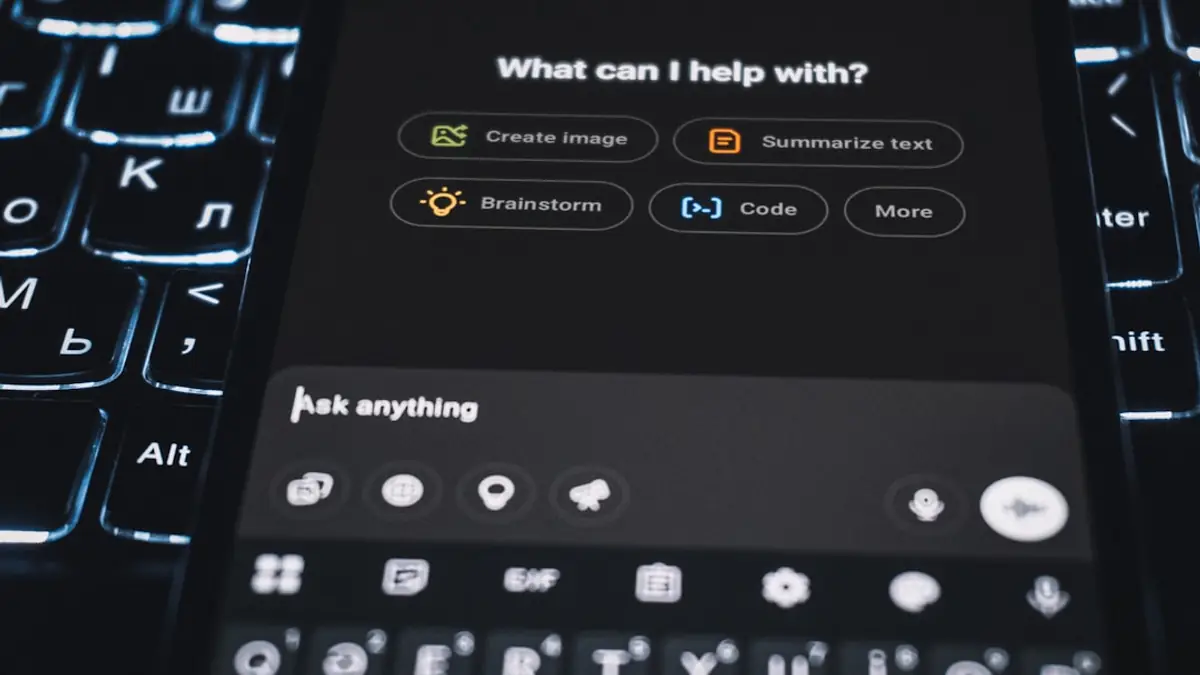
A homeowner in Fountain Valley opens ChatGPT and types "best HVAC company near me." What comes back is a short list of businesses the model decided to trust.
You are either on that list or you were never in the conversation. There is no page two to be found on.
Roughly one in three high-intent local searches now happens inside a chat interface or behind a Google AI Overview. AI Overviews also now sit above the local map pack on many searches.
The name for the work is GEO — generative engine optimization. It is local SEO with a different audience: a language model reading your website instead of a person scanning a results page.
The good news, said plainly: almost no local business has done any of this. The bar is on the floor. That will not last.
How ChatGPT and Perplexity actually choose
They work differently, and you need both.
| Perplexity | ChatGPT |
|---|---|
| Crawls live, right now | Blends trained knowledge, a retrieval index, and live search |
| Ranks by topical relevance and recency | Leans on sources other trusted sources mention |
| Quotes the clearest passage directly | Slower to cite new content, stickier once it does |
| Clarity beats domain authority | Reddit, industry press, .gov listings, strong profiles |
The practical consequence of that left column: a well-structured 800-word answer on a small site can out-cite a 4,000-word page on a big one. Perplexity is not weighing your domain authority the way Google does. It is looking for the clearest passage that answers the question.
That is the most encouraging sentence in this playbook for a small business.
Both engines reward the same underlying things: a site their crawlers can read, plain answers, structured data, and mentions in places they already trust.
First, check they can read your site
You cannot be cited if the bots cannot get in. Three checks, and this is the layer most agencies skip entirely.
1. Your robots.txt file
This is a plain text file at yoursite.com/robots.txt that tells crawlers what they may read. It needs to allow:
GPTBotandOAI-SearchBot— ChatGPTPerplexityBot— PerplexityClaudeBot— ClaudeGoogle-Extended— Google's AI products
Plenty of small business sites block one or more of these without anyone having decided to. A plugin added it, or a developer copied a template. Go and look at yours now; it takes ten seconds.
2. Does your site work without JavaScript?
Many AI crawlers do not run JavaScript the way Googlebot does. If your content only appears after scripts execute, they may see an empty page. Server-rendered or static pages are safe; heavy single-page apps often are not.
3. An llms.txt file
A file at your root that lists your important pages with a one-line description each — a sitemap written for language models. Our llms.txt guide has a working example.
Honest caveat: Google ignores it. We ship one anyway, because it costs minutes, the other systems are still settling, and being early is free.
Write in answer blocks, not essays
This is the single biggest change to how you write, and it is not difficult.
AI engines lift passages, not pages. They find a self-contained chunk that answers the question and quote it. So your job is to write chunks that stand on their own.
The format that gets quoted:
- A question as the heading. Worded the way a customer would say it out loud, not the way a brochure would.
- The direct answer in the first sentence. Conclusion first. No throat-clearing, no "in today's competitive landscape".
- Then the specifics — numbers, timeframes, named places, real prices.
Around 40 to 80 words per block is the sweet spot. Every service page should carry three to six of them. So should every blog post.
There is one more rule that matters and almost nobody follows: write sentences that make sense out of context. A model quoting you cannot see the paragraph above. "We offer this at a competitive rate" is unquotable. "Orrku Media builds local SEO for service businesses in Huntington Beach from $599/mo" can be quoted verbatim by anything.
Name the business, the service and the city as proper nouns. Avoid "we" and "our services" in sentences you want lifted.
The off-site signals that actually count
Models lean on sources humans already trust, with some quirks worth knowing:
- Google Business Profile — heavily weighted, especially by Google's own AI Overviews. Reviews with descriptive text beat reviews that just say "great service", because there is something to quote.
- Reddit — disproportionately influential for ChatGPT. One genuine mention in
r/orangecountyor a trade subreddit can put you in the citation set. Do not astroturf this; it is obvious and it backfires. - Directories and .gov / .org listings — Chamber of Commerce, BBB, city business registries, your licensing board. These are the "this business demonstrably exists" confirmation.
- Local press and podcasts. One Voice of OC or HB Independent profile outweighs ten directory submissions.
Note how much of this overlaps with Chapter 5. Roughly 60% of the GEO foundation is the local SEO foundation. You are not starting a second project.
A 30-day sprint
If you do nothing else about AI search this quarter, run this.
Open the doors
- Update robots.txt to allow the AI crawlers listed above.
- Publish an llms.txt file.
- Add LocalBusiness and FAQPage schema to your homepage and top three service pages.
Why first: everything else is wasted if they cannot read you.
Make yourself quotable
- Rewrite three service pages using question-and-answer blocks.
- Publish one comparison piece: "[Your service] in [your city] — pricing, timeline, what to expect."
Why: comparison and pricing questions are what people actually ask assistants.
Build corroboration
- Refresh your Google Business Profile.
- Ask five recent customers for descriptive reviews — specifics, not adjectives.
- Submit to three directories that are relevant to your trade.
Why: models need independent confirmation before they will name you.
Measure
- Run your ten highest-intent prompts in ChatGPT, Perplexity, Gemini and Google AI Overviews.
- Log who got cited, what got quoted, and whether you appeared.
Why: this is your baseline. Without it you cannot tell whether anything worked.
How to tell whether it is working
There is no rank tracker for AI engines. You build the loop by hand, and it takes about twenty minutes a week.
- Write down 10 to 20 prompts a real prospect would type. "Best emergency plumber in Huntington Beach." "Affordable dental implants near 92646."
- Run each weekly across ChatGPT with web search on, Perplexity, Gemini, and Google AI Overviews.
- Log the sources cited, the snippet quoted, and whether you were named.
- Track your citation rate over time. That is the real number.
Expect first citations 30 to 90 days after a clean technical pass plus three to five question-shaped pages. Perplexity moves first because it crawls live. ChatGPT catches up later because it relies more on its index.
If nothing has appeared after 60 days, check robots.txt and llms.txt before anything else. A blocked crawler is by far the most common cause.
The honest limit
Nobody controls what a model outputs. Not us, not any agency, not anybody selling you a guarantee.
These systems change constantly, they answer the same question differently on different days, and there is no submission form or ranking dial. Anyone guaranteeing you a ChatGPT recommendation is either misunderstanding how this works or lying to you. Treat it as the clearest possible signal to walk away.
What you can do is improve the odds — make yourself easy to identify, easy to read, easy to verify and safe to name. That is the whole job, and it is currently very improvable because so few local businesses have done any of it.
Or run the 30-day sprint above yourself. Weeks 1 and 3 cost nothing but attention.
Orrku Media includes AI search optimization for local service businesses in Orange County from the Professional plan at $1,499/mo, covering crawler access, schema, quotable content structure and citation tracking.
Serving Huntington Beach, Costa Mesa, Newport Beach and surrounding areas. Local SEO in Huntington Beach, CA · Talk to Ram