
Searching for an organic search engine optimization SEO company usually starts the same way. You Google the phrase, get a wall of “top 10” lists and paid badges, request three quotes, and end up with three wildly different proposals — one at $399 a month, one at $1,800, and one that “starts at” a number that mysteriously triples after onboarding. None of them explain what you are actually paying for.
This guide gives you nine questions to ask before you sign anything. Each one is designed to expose the gap between an agency that does real organic work and one that recycles the same audit deck for every client. Use them on any organic search engine optimization SEO company you are considering — including us.
The planning questions: what will actually get done, and why
Question 1: “What exactly will you do in the first 90 days?”
A real organic SEO engagement has a boring, specific opening act: a technical crawl, a page-by-page on-page review, a Google Business Profile audit if you are local, keyword mapping, and a content plan tied to the pages that already have ranking potential. If the answer you get is “we’ll optimize your SEO and build authority,” that is not a plan. That is a stall.
Ask for the deliverables in writing. A trustworthy agency can tell you which pages get rewritten, which titles get changed, and which technical fixes ship in month one. If you want to see what that first pass looks like in practice, the on-page checklist we run before any organic SEO campaign starts walks through it step by step.
Question 2: “How do you decide which keywords to target?”
Bad agencies pick keywords by search volume alone. Good ones weigh intent, competition, and how well your current site is positioned to rank for a term without a year of link building. For a local service business, the highest-return keywords are usually service-plus-city phrases with clear commercial intent — not the biggest number in the keyword tool.
If the agency cannot explain why they chose a keyword over a nearby alternative, they are guessing. Ask them to show you the shortlist and the reasoning.
The accountability questions: reporting and who does the work

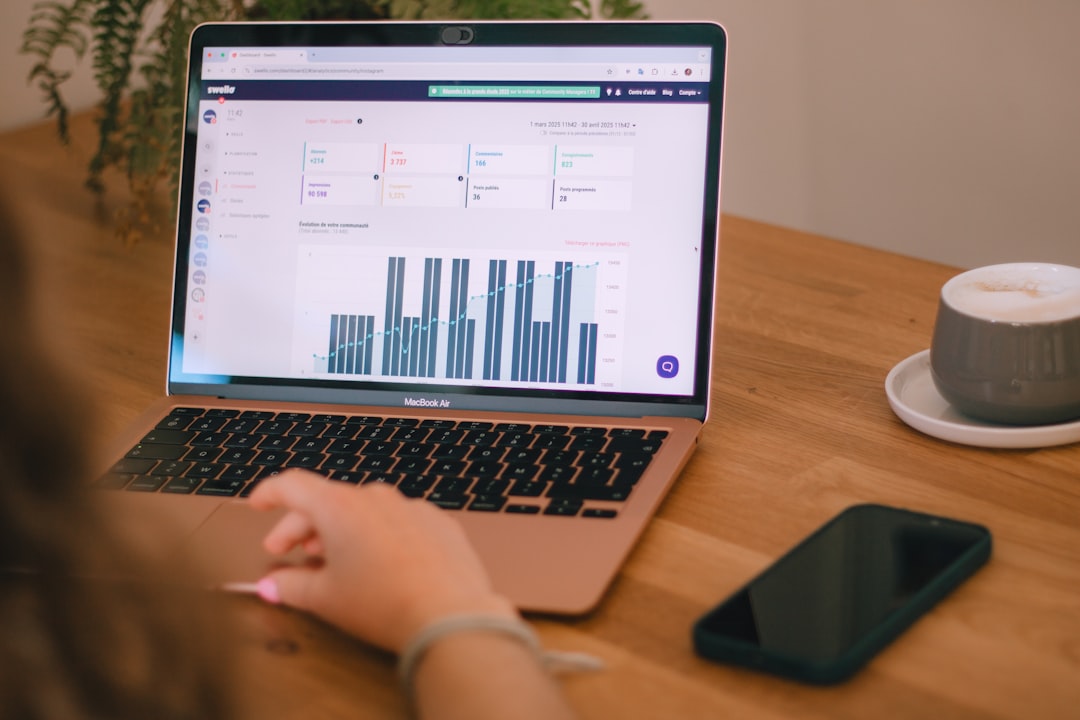
Question 3: “What does your reporting actually look like?”
Ask to see a real (redacted) monthly report from a current client. You are looking for three things:
- Keyword rankings tracked over time, not a cherry-picked snapshot
- Organic traffic and conversions from Google Analytics or a similar source
- A plain-English summary of what changed on the site that month
If the report is a PDF full of vanity metrics — impressions, “domain authority,” social followers — you are being managed, not served. Transparent reporting is one of the clearest signals separating serious agencies from filler shops, and it is a theme across our Fullerton SEO companies comparison as well.
Question 9: “Who will actually be doing the work?”
Many agencies sell you on a senior strategist and then hand your account to a junior coordinator or an offshore team you never meet. That is not automatically bad — but you should know who is writing your content, who is touching your site, and who you email when something breaks.
Ask for names. Ask how often you will talk to them. A founder-led agency or a small team with direct access is usually a better fit for a local service business than a large shop where you are account #847.
The contract and ownership questions
Question 4: “Do you require a long-term contract?”
Long contracts exist because agencies know their work often does not produce results fast enough to keep a client voluntarily. Organic SEO does take time to compound, but that is an argument for month-to-month accountability, not a 12-month lock-in.
Ask what happens if you want to leave in month four. If the answer involves an early termination fee, that fee is the real product.
Question 5: “Who actually owns the website, content, and accounts?”
This is where a lot of small businesses get quietly trapped. Some agencies build your site on their proprietary platform, hold the Google Business Profile login, and publish content under their own accounts. When you leave, you leave with nothing.
Before signing, confirm in writing:
- You own the domain and hosting account
- You own the website files and any content produced
- You are the primary owner of your Google Business Profile, Analytics, and Search Console
If an agency hesitates on any of these, walk.
The technical execution questions: on-page, links, and AI search
Question 6: “How do you handle on-page SEO versus link building?”
A legitimate organic program spends most of its early effort on the site itself — titles, headings, internal links, page speed, schema, content depth. Off-page work (citations, digital PR, earned mentions) matters, but it will not save a technically broken site.
If the agency’s pitch is 80% “we’ll build you backlinks,” ask where those links come from. Paid link networks and private blog networks are still sold, still risky, and still a fast way to get a manual penalty. For a fuller picture of what good on-page work covers, see the 12 organic SEO mistakes we find on Orange County websites.
Question 7: “How are you handling AI search and Google’s AI Overviews?”
Organic search in 2026 is not just ten blue links. AI Overviews, ChatGPT, Perplexity, and Gemini are pulling answers directly from web content, and the pages that get cited are not always the ones ranking #1 in classic search. A modern organic SEO company should have a clear answer for how they optimize for this — schema, entity clarity, question-led content, and brand mentions across the open web.
If they say “AI search isn’t real yet,” they are behind. If they say “we do AI SEO” but cannot describe what changes on the page, they are repackaging. Our breakdown of AI SEO services and what’s just repackaged SEO covers what to expect.
The results question

Question 8: “What results can you honestly promise?”
The honest answer is: nobody can guarantee a #1 ranking. Google’s algorithm does not accept bribes, and any agency promising “page one in 30 days” is either lying, gaming a low-competition long-tail term you did not ask for, or planning to run ads and call it SEO.
What a good agency can commit to is process: what work will be done, on what schedule, with what reporting. Results follow from consistent execution, and organic SEO usually shows meaningful movement in 3–6 months, with compounding gains after that. If you want the honest tradeoffs, what search engine optimization actually increases lays out where SEO helps and where it does not.
How to use these nine questions
Send them, in writing, to every organic SEO company on your shortlist. You are not being difficult — you are doing what any operator should do before committing budget. The agencies that answer clearly and specifically are the ones worth a second call. The ones that dodge, redirect, or send a generic proposal in response have told you everything you need to know.
If you want a starting point that already answers most of these questions transparently, that is the model we built Orrku Media around: month-to-month, founder-led, clear deliverables, and full client ownership of every asset. You can also compare pricing structures across the market in our breakdown of why Orange County businesses are ditching ads for a $66/day organic strategy.
The worst organic SEO decision is the one made in a hurry because a salesperson said the discount ends Friday. Take the extra week. Ask the nine questions. The agency that earns the work will still be there.
Photos by Amy Hirschi, Sebastian Herrmann, Swello, lucas mendes on Unsplash.