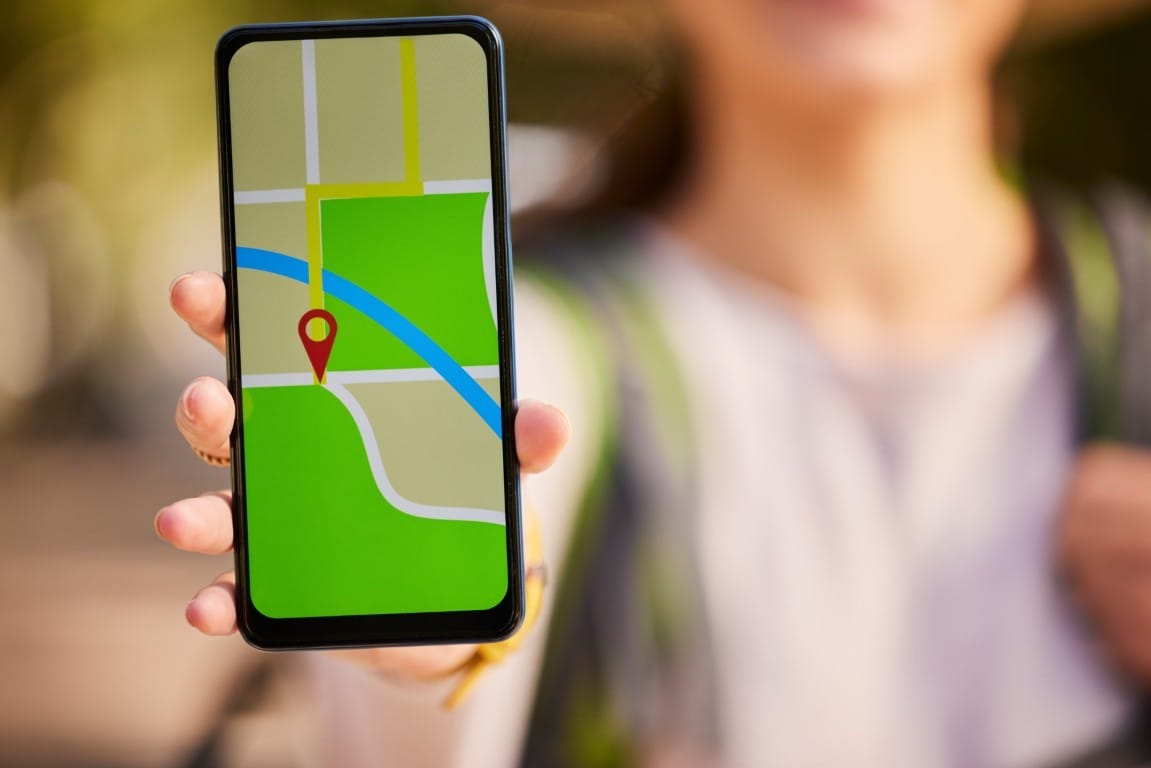

When a hungry diner in Huntington Beach types “best restaurants near me” into their phone at 6:47 p.m. on a Friday, Google returns a Map Pack with three restaurants. Those three restaurants get the tap. Everyone else gets scrolled past. If you own a restaurant and you are not one of the three, you are not losing to a mystery — you are losing to a scoring system that rewards specific, verifiable inputs on your Google Business Profile and around the web.
This is a plain-English walkthrough of how Google decides which three restaurants show up for “best restaurants near me,” what an owner can actually influence, and how to verify each input yourself before you hire anyone to fix it.
What the Query Actually Means to Google
Google treats “best restaurants near me” as a local intent query with three signals baked into it:
- Best — a quality filter that leans on ratings, review volume, and review recency.
- Restaurants — a category filter that pulls from your Google Business Profile primary and secondary categories.
- Near me — a proximity filter based on the searcher’s live GPS location, not their billing address or their home ZIP.
That combination is why the three results a diner sees on Main Street are not the same three a diner sees six blocks away. Proximity is recalculated for every search, which means you are not competing against every restaurant in Orange County — you are competing against restaurants inside the searcher’s immediate radius, on that specific query, at that specific moment.
That also means the answer to “why am I not in the pack?” is almost never one thing. It is usually a stack of small gaps that add up.
The Three Ranking Buckets Google Uses
Google has publicly described local ranking as a mix of three factors: relevance, distance, and prominence. That framing is useful because it tells you exactly where to invest.
| Bucket | What it means | What you control |
|---|---|---|
| Relevance | How well your profile matches the query | Categories, services, menu, description |
| Distance | How close you are to the searcher | Address accuracy, service area settings |
| Prominence | How well-known and trusted you are | Reviews, citations, website authority, photos |
Distance is the one you cannot move — your restaurant is where it is. Relevance and prominence are where owners win or lose the Map Pack.
Relevance: The Profile Fields That Decide the Match

Google reads your Google Business Profile the way a diner reads a menu. If the fields are blank, wrong, or generic, you don’t get shortlisted. The fields that matter most for a restaurant:
- Primary category. “Restaurant” is too broad. “Mexican restaurant,” “Ramen restaurant,” “Seafood restaurant” — the specific category is how Google understands what you actually serve.
- Secondary categories. Add every category that honestly applies (Bar, Takeout restaurant, Family restaurant) but do not stuff categories that do not match.
- Menu. A structured menu with item names and prices gives Google readable content to match against long-tail queries like “best birria tacos near me.”
- Attributes. Outdoor seating, dog-friendly, curbside pickup, reservations — each attribute is a filter a diner can apply.
- Hours. Accurate open hours, plus special hours for holidays. An “open now” filter will remove you if your hours are wrong.
We covered this in more depth in Photos, Menus and Hours: The Profile Fields That Decide Near-Me Results, which walks through the exact fields to audit first.
Prominence: Reviews, Photos, and the Signals Google Trusts
Prominence is the fuzziest bucket, and it is where most restaurants lose the pack. Google is trying to answer a simple question: do real people think this place is good? The signals it uses to answer that:
- Review volume. A restaurant with 400 reviews looks more “prominent” than one with 12, even if both average 4.8 stars.
- Review recency. A review from last week counts differently than one from 2021. A steady flow beats a big spike three years ago.
- Review text. When reviewers mention dish names, occasions (“date night,” “birthday”), and neighborhoods, Google uses those phrases to match future queries.
- Owner responses. Responding — briefly and professionally — signals an active business.
- Photos. Fresh photos from the business and from customers. Google’s vision models read what is in the photo.
- Website signals. A fast, mobile-friendly website with your NAP (name, address, phone) matching the profile.
- Citations. Consistent listings on Yelp, TripAdvisor, OpenTable, Apple Maps, and industry directories.
The “best” filter in “best restaurants near me” leans hardest on the review signals. If your review count is a fraction of the competitors inside your radius, you will not be shortlisted no matter how good the food is.
The Hidden Filter: Query Deserved Freshness

Restaurant search results move more than most local categories because Google knows the market changes. New restaurants open. Old ones close. Hours shift with seasons. A profile that has not been updated in six months looks stale to the algorithm, even if nothing has changed operationally.
Simple freshness signals a restaurant owner can send weekly:
- Upload two or three new photos (dishes, interior, staff).
- Post an update through the Google Business Profile “Updates” or “Offers” section.
- Respond to every new review within a few days.
- Adjust hours for holidays before the holiday, not after.
None of this is glamorous, and none of it requires an agency. It requires someone whose job it is to do it every week. The same principle applies outside restaurants — we broke it down for other verticals in Near Me Is Not Just Restaurants: What It Means for Contractors and Clinics.
How an Owner Verifies Each Input
Before paying anyone to “do your local SEO,” you can audit the exact inputs Google is scoring. Do this from a phone, not a laptop, because the Map Pack renders differently on mobile.
- Search your own category (“tacos near me,” “sushi near me”) from inside your restaurant and from a mile away. Note which three appear at each location.
- Compare the top three on: review count, review recency, primary category, photo count, menu completeness, and attributes.
- Check your NAP consistency on Yelp, Apple Maps, TripAdvisor, and your own website. Any mismatch in address format or phone number is a citation gap.
- Run your site through Google’s PageSpeed Insights on mobile. A slow site drags on prominence even if the profile is perfect.
- Read your last 20 reviews. Do they mention specific dishes and occasions? If not, your review prompt is too generic.
Run this audit once, write down where each of your three closest competitors beats you, and you will have a real punch list — not a vague agency proposal.
Where AI Search Fits In

“Best restaurants near me” is still overwhelmingly a Google query, but a growing share of diners are asking ChatGPT, Perplexity, or Google’s AI Overviews the same question in longer form: “Where should I take my parents for dinner in Huntington Beach on Saturday?” The AI shortlist is drawn from many of the same signals — reviews, structured profile data, website content that clearly describes the restaurant — but weighted differently. A restaurant that has invested in clean, descriptive website copy tends to get named in AI answers even when it is not in Google’s Map Pack.
If you are evaluating agencies that claim to handle this new layer, AI SEO Services: What Agencies Actually Do (and What’s Just Repackaged SEO) explains what a real engagement includes and what to push back on. We also covered the parallel shift in another category in How Orange County Clinics Win the AI-Answer Box for “Dentist Near Me”, and the mechanics for restaurants are similar.
If you want the broader view of what to keep updated across search, maps, and AI, the Complete Digital Presence Checklist for 2026 is the closest thing to a full punch list.
What to Do Next
You do not need a bloated retainer to compete for “best restaurants near me” in your immediate neighborhood. You need someone consistently working the profile, the reviews, the photos, and the website — and honest reporting on which of those inputs moved.
If you want a founder-level audit of where your restaurant currently sits inside the three-result window on your block, that is what we do at Orrku Media. Call (714) 732-8549 or reach out through orrkumedia.com and ask for a Map Pack audit. We will tell you which of the three buckets — relevance, distance, or prominence — is costing you the tap, and what it would take to close the gap.
Photos by Hotel Lal Garh Fort and Palace, Hotel Lal Garh Fort and Palace, Hotel Lal Garh Fort and Palace, Hotel Lal Garh Fort and Palace on Unsplash.