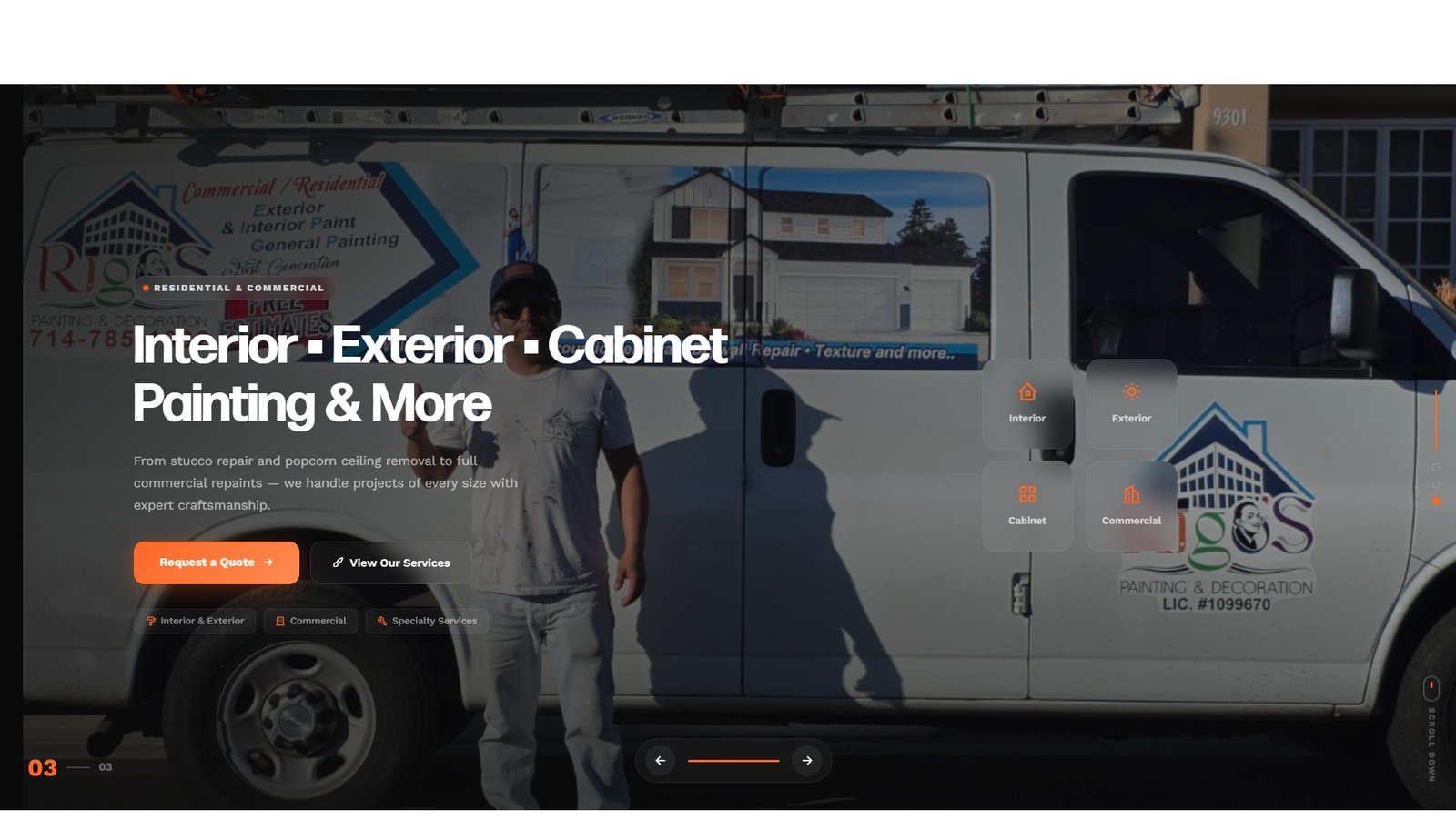

Most social media content calendars fail for the same reason gym memberships do. They start in January with color-coded tabs, hashtag research, and a content pillar workshop, and by the third week the owner is posting a photo of a truck from their phone with the caption “Great day out there.” The calendar sits in a Google Drive folder nobody opens.
The fix is not a better spreadsheet. The fix is a smaller one. A social media content calendar template that a service business will actually fill in has to be so short that filling it takes twenty minutes on a Monday morning, not two hours on a Sunday night that never happens.
Here is the version we hand to plumbers, dentists, contractors, and salons in Orange County. It is boring on purpose.
The Four Post Types (And Nothing Else)
Most content calendars die because they ask an owner to invent categories. Educational content. Behind-the-scenes. UGC. Motivational. Testimonial Tuesday. Throwback Thursday. By the time you have decided what a post is, you have not written it.
Collapse everything into four buckets and refuse to add a fifth:
- Work — a photo or short video of a job you did this week. Before, after, or in progress.
- Answer — one question a customer asked you, answered in three or four sentences.
- Face — a person on your team. Name, role, one specific thing they are good at.
- Proof — a review, a screenshot, a thank-you text (with permission), or a completed project reference.
That is the entire content universe for a local service business. If a post idea does not fit one of the four, it does not get made. This rule alone is why the template gets filled in. There is no thinking left to do.
How Often Should A Local Business Post?

A local service business should post three times a week on its primary platform and once a week on a secondary one. That is the direct answer. Three primary, one secondary. Not daily. Not seven pieces of content per platform per week. Three.
Why three? Because the algorithm rewards consistency more than volume, and because a service business owner who commits to daily posting will quit inside a month. Three posts a week is twelve posts a month. Twelve posts is enough for Google Business Profile to look active, for Instagram to show your account to followers, and for Facebook to keep your page from getting throttled. It is also few enough that you will actually do it.
Pick one primary platform based on where your customers already are. Home services and trades: Facebook. Dental, salon, aesthetic: Instagram. B2B services: LinkedIn. Everything else defaults to Facebook because that is where local buyers over 35 spend time. The secondary platform gets a repost of your best piece from that week. Do not build separate content pipelines for four platforms. You will burn out.
If this is the part you keep failing at, Social Media Management is the service to hand off. The framework below still works when someone else is executing it.
Filling A Month In Twenty Minutes
Open the template on the first Monday of the month. You will see twelve rows — one per post — and four columns: date, type, hook, and asset needed.
Here is the fill-in sequence:
- Minute 1–3. Assign types. Alternate: Work, Answer, Face, Proof, Work, Answer, Work, Proof, Face, Work, Answer, Proof. Work shows up most often because it is the easiest to shoot and the most persuasive.
- Minute 4–10. For each Work row, write the address or job type in the hook column. “Kitchen repipe, Fountain Valley.” “Cavity filling, new patient from Yelp.” You are not writing captions yet. You are labeling.
- Minute 11–15. For each Answer row, write one question a customer asked you in the last two weeks. If you cannot think of four, check your text messages. They are in there.
- Minute 16–18. For each Face row, name a team member. For Proof, note which review or screenshot.
- Minute 19–20. Assign the shoot. Which jobs this week need a before/after photo? Tell the crew.
Captions get written the morning of the post, not now. Trying to write twelve captions in advance is the second reason calendars die. Write the caption when the photo exists.
Where The Raw Material Already Is

The reason owners think they have nothing to post is that they are looking at social media as a separate task. It is not. It is a downstream output of work you are already doing.
Raw material sources, in order of yield:
- The camera roll on your crew’s phones. Ask them to send you one photo per job. That is your Work bucket for the month.
- Your inbox and text threads. Every question a customer asks you is an Answer post. Copy the question, answer it, done.
- Your Google reviews. Screenshot, blur the last name, post. That is a Proof.
- Your invoicing software. Completed jobs are a project list. Pair with a photo and you have a Work post.
- The whiteboard in your office. Whatever is on it is probably interesting to someone.
Owners who think they have nothing to post are usually running a business with dozens of daily moments that would make fine content. The problem is capture, not creativity. Fix capture first — one shared album, one rule that says “photo before you leave the job” — and the calendar fills itself.
For a longer read on what actually resonates in local social feeds, see our no-BS guide to social media marketing for Orange County small businesses. Dentists specifically should look at what actually works on social for dental practices in 2026.
What To Do When You Have Got Nothing

Some weeks the crew forgets to take photos, no one asked a good question, and you are staring at Monday with an empty template. Do not skip the week. Post one of these instead:
- A short answer to “how much does [your most common service] cost?” — answered with a range and the two variables that move it.
- A photo of your truck, storefront, or workspace with one sentence about what you are working on.
- A repost of a post that performed well three or four months ago. Nobody remembers.
- A neighborhood observation. “Third slab leak on this block in six weeks. If your water bill jumped, call someone.” This is a Work post disguised as an Answer.
Empty weeks are the test. The owners who post something on empty weeks are the ones who compound. The ones who wait for the perfect content week never post again.
Download The Template
The template itself is a single-page spreadsheet with the four columns above and twelve rows. There is no macro, no automation, no Notion database. Simplicity is the feature.
If you want the actual file, request it through our contact page and we will send it back the same day. If you would rather have someone run the whole system for you — capture, calendar, captions, posting — that is the Social Media Management service, and it pairs with the organic search playbook most Southern California service businesses need in 2026.
Either way, the point is not the template. The point is the discipline of twelve posts a month, four types, twenty minutes on a Monday. Do that for a quarter and your social presence stops being something you feel guilty about.
When you are ready to see what else is leaking on the marketing side of the business, grab a free website audit and we will show you where the social calendar fits in the bigger picture.
Photos by 2H Media, Ali Mkumbwa, NORTHFOLK, Rifki Kurniawan on Unsplash.